


Your biology changes slightly in your 40s. With a few minutes of post-meal movement, you can stabilize your metabolism and weight.
Welcome to the Healthy Aging Newsletter, a free publication translating trustworthy medical research into simple habits to age well, free of chronic disease. I’m Dr. Ashori, a family medicine doctor turned health coach.
Eating like your 20s but slowly gaining weight? Muscle function drops after 35, so the same bowl of pasta gives you a bigger blood sugar spike.
One easy solution is to get the muscles activated after your meals. 5 minutes of movement improves muscle, lowers glucose, and lets you keep the foods you enjoy.
Excess Sugar = Fat Deposits
Whatever you put into your mouth eventually turns into glucose which floats around the blood until it’s absorbed.
Some of it gets absorbed by muscle cells but not if the muscles are inactive. Exercise activates the transporters that remove the glucose and prevent them from turning into fat.
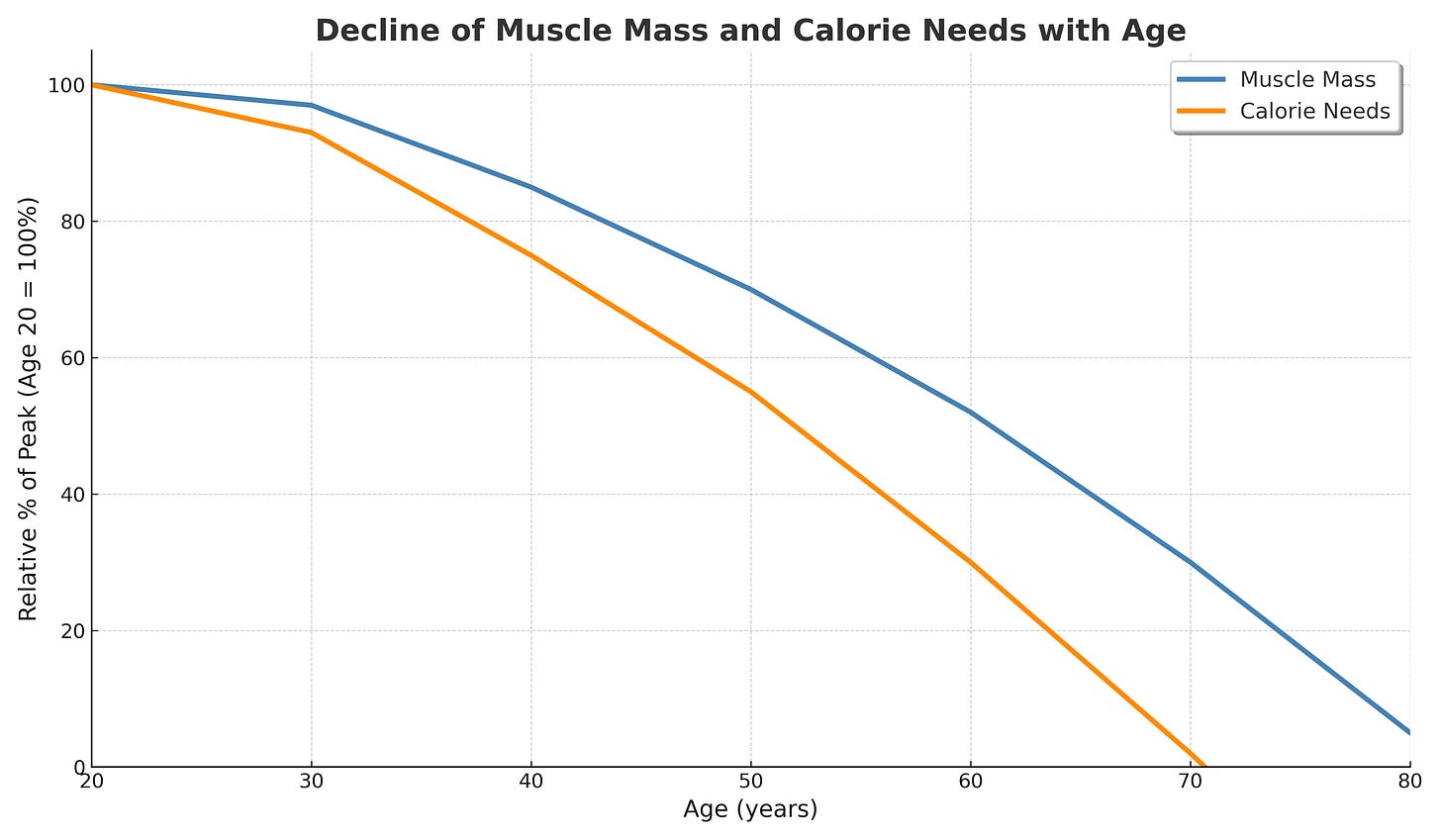
- Less muscle → lower metabolism. Most adults lose muscle starting in their 30s. Less muscle burns fewer calories at rest.
- Lower insulin sensitivity. The same bowl of pasta pushes blood sugar higher and keeps it high longer in your 30s vs your 20s.
- Less daily movement. Sedentary jobs prevent enough muscle activation to make these glucose transporters do their job.
5-Minute Daily Solution
After most of your meals, especially the high-carb ones, aim for a 5-minute movement which could be as simple as a walk.
Try this after any meal or once per day:
- Squats or sit-to-stands
- Band or wall pushups
- Band rows
- Hip hinge or glute bridge
- 5–10 minute walk
- A few yoga poses

Do slow reps, breathe all the way. This isn’t meant to be a gym workout but a way to activate the muscle cells.
Time cost: 5 minutes.
Benefit: More muscle, better glucose control the same day, a higher daily burn over time.
N. is a 42-year-old medical director with lots of responsibilities. She isn’t ‘out of shape’ but it’s as if a switch went off inside of her after 35. She’s active on weekends, eats healthy, does household chores, but the weight keeps coming.
After ruling out any perimenopausal changes, we just added some movement after dinner, her heaviest meal. A 5-minute walk has turned into 30 minutes with her kids joining her.
She went down a dress size but more importantly she feels she sleeps better at night, and has more energy during her workday.
Making Meal Adjustments
Without making big changes to your meals, play around with the nutrient content of your meals:
- Add fiber. 2 fists of vegetables or beans on the plate with any meal slows down excess calorie absorption.
- Get your protein. Eggs, Greek yogurt, tempeh, beans, salmon, chicken, lentils, and other lean proteins keep you feeling full.
- Swap starches. Replace white rice and refined pasta with brown rice, quinoa, and sweet potatoes.
- Watch liquid calories. Hungry, thirsty, bored? Try flavored carbonated water, tea, or coffee instead of the shake, soda, or juice.

Keep an 8-Week Journal
Pick 1-2 of these and track them. Celebrate your wins.
- How often after eating did you move?
- How often did your meals have more fiber than carbs?
- Measure your waist-to-height ratio weekly, if it’s motivating.
- Whatever your step count is now, add 1K weekly.
- How often do you feel winded or tired?

Mini FAQ:
- Q: How much actual resistance do I need?
- Body weight and bands are enough to start. You’re trying to activate the muscles more so than getting a workout in.
- Q: Is walking alone really enough?
- Walking definitely helps, especially if you do it consistently. You can’t walk without activating your muscles.
- Q: When will I notice a change?
- Most of my patients notice a difference in 2–4 weeks. Waist and strength changes usually show up by 8–12 weeks.
- Q: How come I don’t see any change in my blood sugars on my CGM?
- The change in glucose is too subtle at first. The effects on insulin is often more important and it takes time for the muscles to increase their receptors.
The Takeaway
Your body in your 40s works differently than in your 20s. Keep the meals you enjoy, but give your muscles the movement they need to function. Focus on small, daily movements plus some changes to your plate (fiber) to see big results.
Don’t treat post-meal activities as a punishment for eating heavy. When I lived in Barcelona, it was quite common to see people go for a walk after dinner – the streets were packed with leisurely walking adults and kids.
If you want a simple plan tailored to your schedule and current labs, book a quick call and we’ll map it out together:


